Safety-first response
Suspected leaks are treated as safety concerns, and emergency actions come before scheduling normal repair work.
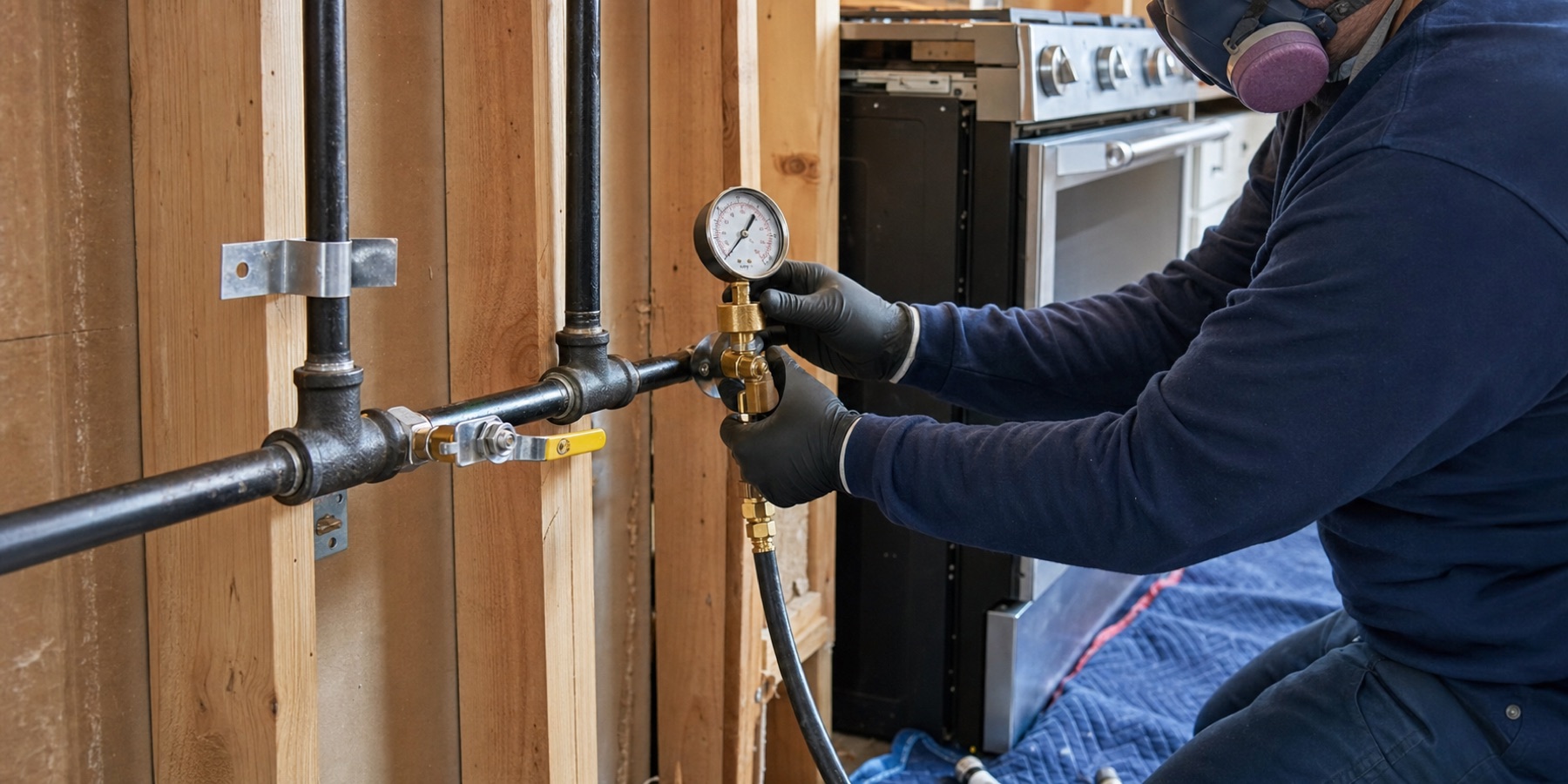
Gas piping requires careful sizing, compatible materials, protected routing, accessible shutoffs, and testing. We plan approved installations and repairs around the appliance and existing system.
Gas line work can include new piping for an applicable appliance, replacement of damaged or improperly configured sections, valve and connection work, and pressure testing after approved changes. Problems may include an identified leak, corrosion, damaged piping, an inaccessible shutoff, or a renovation that changes appliance location or demand.
Existing homes may combine different construction eras, crawlspace routes, exterior regulators, propane or natural gas, and appliances with different pressure and venting requirements. Appliance installation can also involve electrical, ventilation, or manufacturer requirements outside the fuel-piping scope, so coordination matters.
Suspected leaks are treated as safety concerns, and emergency actions come before scheduling normal repair work.
Fuel type, appliance demand, pipe length, diameter, access, protection, and shutoff placement guide the scope.
Approved piping changes are checked using the applicable test procedure before being placed into service.
Final materials depend on the existing installation, access, intended use, manufacturer instructions, and applicable requirements.
Every property is different. The estimate identifies the approved diagnostic, repair, installation, access, testing, cleanup, and exclusions that apply to your project.
Discuss My ProjectBefore the visit, clear safe access when possible, note when the symptom occurs, and gather photos, equipment information, permits, or system records that may help.
For a suspected leak, leave the area, avoid switches or flames, and contact the gas supplier or emergency services from a safe location before repair scheduling.
We confirm fuel type, appliance information, existing system capacity, access, routing, and related project requirements.
The approved piping is installed or repaired, supported and protected, then tested as applicable before service is restored.
Not sure whether this is the correct service? Send the address, a photo when safe, and a short description. We’ll help identify the appropriate first visit.
Ask about your project →Project conditions can change the recommendation, but these answers explain common decisions and preparation steps.
Leave the building immediately, do not use switches, phones, flames, vehicles, or anything that may create a spark nearby, and call the gas supplier or 911 from a safe location. Do not return until cleared by the appropriate authority.
Not automatically. Fuel type, pressure, total connected demand, pipe sizes, lengths, and appliance requirements must be reviewed before adding a branch.
Connection depends on the appliance, project scope, manufacturer requirements, venting, electrical work, and applicable approvals. The estimate will state what gas piping and connection work is included.
Provide appliance specifications when possible, clear access to the proposed route and existing meter or tank area, and expect the fuel supply to be interrupted during approved work and testing.
Call or send the project details. We’ll confirm service availability and whether an inspection or diagnostic visit comes first.