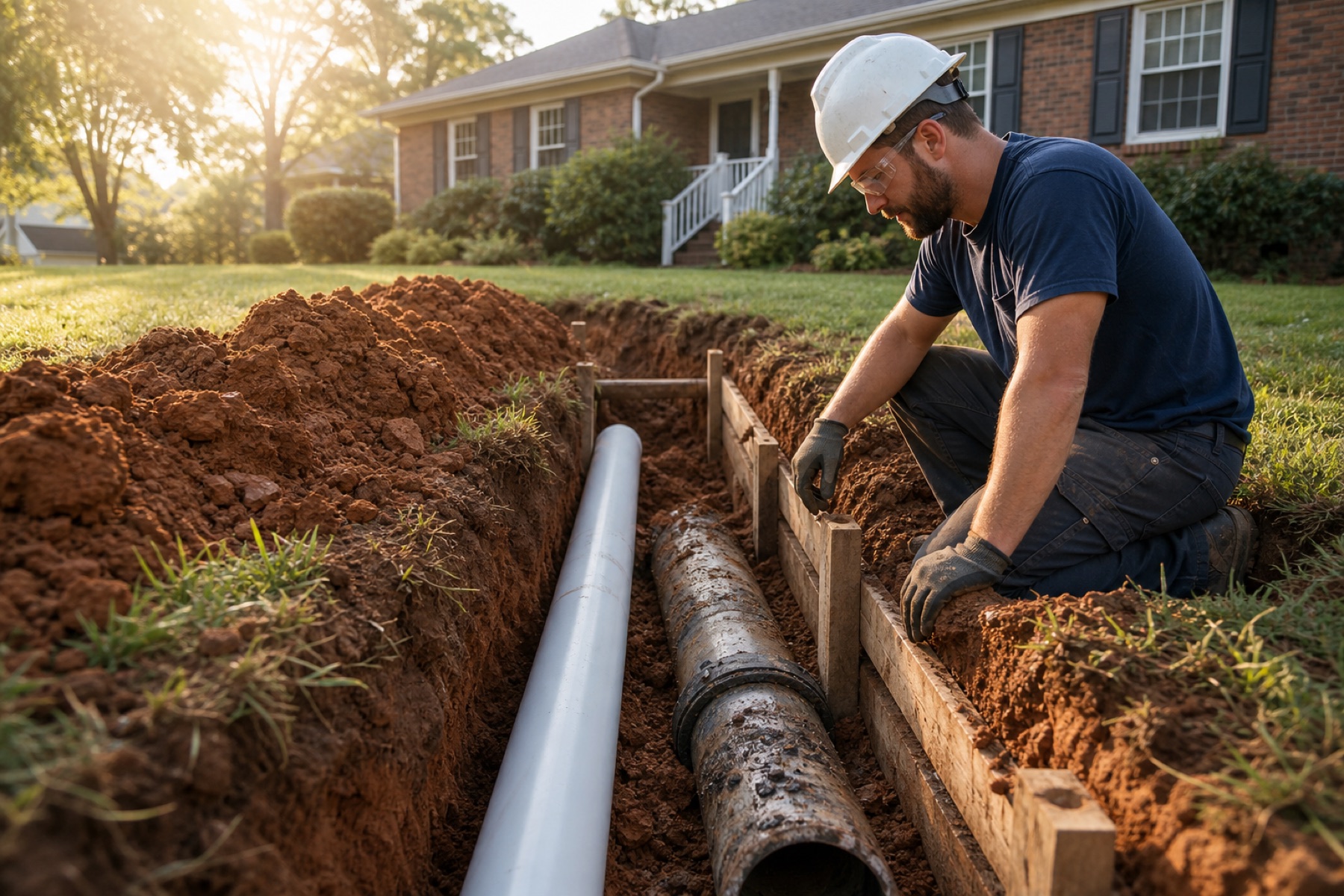
Site-specific planning
System location, records, soils, slopes, wells, structures, access, and permits shape the work.
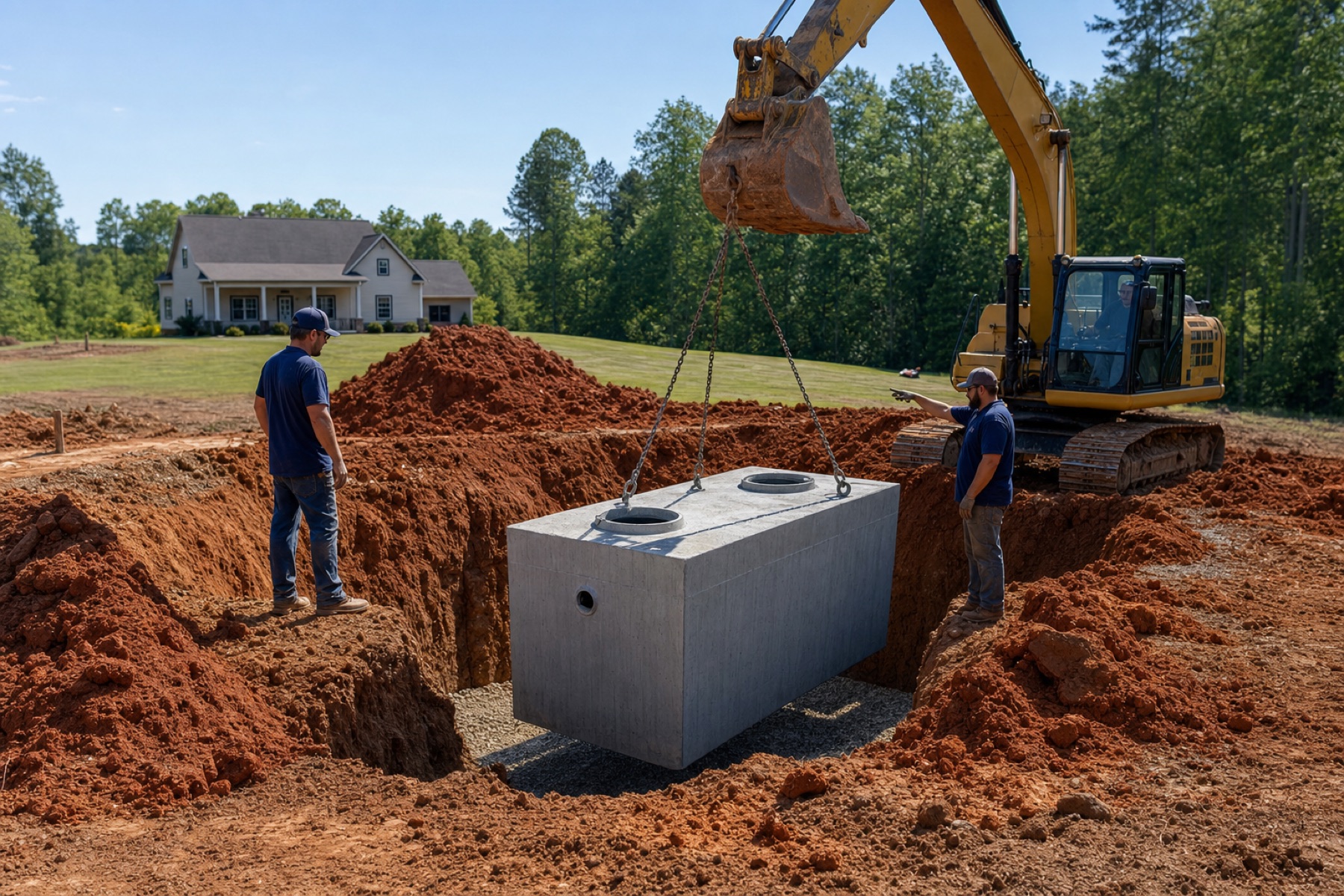
Septic work begins with the site, existing system, soil, wastewater flow, access, and applicable permits. We help property owners address tank and piping problems and plan qualifying installations.
Septic tank installation and repair involve the watertight tank, inlet and outlet piping, access points, baffles or tees, and connections to the broader wastewater system. Symptoms such as slow drains, sewage odors, wet ground, backups, or damaged lids may come from the tank, piping, drain field, usage, or another system condition. Proper diagnosis protects health, property, and nearby water resources.
Piedmont clay soils, slopes, tree roots, wet weather, vehicle traffic, older records, and private-well setbacks can affect septic planning. New or replacement systems may require evaluation, permits, design, and inspections from the appropriate county or local authority before work starts.
System location, records, soils, slopes, wells, structures, access, and permits shape the work.
We review symptoms and available system information before assuming the tank itself is the only problem.
Tank, piping, pumping, drain-field, permit, inspection, and restoration responsibilities are identified before work.
Final materials depend on the existing installation, access, intended use, manufacturer instructions, and applicable requirements.
Every property is different. The estimate identifies the approved diagnostic, repair, installation, access, testing, cleanup, and exclusions that apply to your project.
Discuss My ProjectBefore the visit, clear safe access when possible, note when the symptom occurs, and gather photos, equipment information, permits, or system records that may help.
We gather records when available, locate accessible components, review symptoms, and assess access, wells, structures, and ground conditions.
Required evaluation, design, permits, pumping, inspections, tank specifications, excavation, and restoration are identified before installation or major repair.
Approved components are installed, connections are checked, required inspections are completed, and the excavation is closed according to the agreed scope.
Not sure whether this is the correct service? Send the address, a photo when safe, and a short description. We’ll help identify the appropriate first visit.
Ask about your project →Project conditions can change the recommendation, but these answers explain common decisions and preparation steps.
No. The cause could be a clog, full tank, damaged inlet or outlet, hydraulic overload, drain-field issue, or other condition. Stop using water and have the system evaluated.
New and replacement systems commonly require county or local approvals, site evaluation, design, and inspection. Requirements depend on the property and scope, so they must be confirmed for the specific project.
No. Soil and site evaluation, setbacks from wells and structures, slopes, easements, repair area, and approved design determine suitable locations.
Provide any permits, maintenance records, surveys, or system diagrams you have. Keep vehicles away from the suspected system area and identify gates, overhead lines, landscaping, wells, and other access constraints.
Call or send the project details. We’ll confirm service availability and whether an inspection or diagnostic visit comes first.