Demand-based sizing
Capacity is considered against household use and the available energy source rather than choosing by footprint alone.
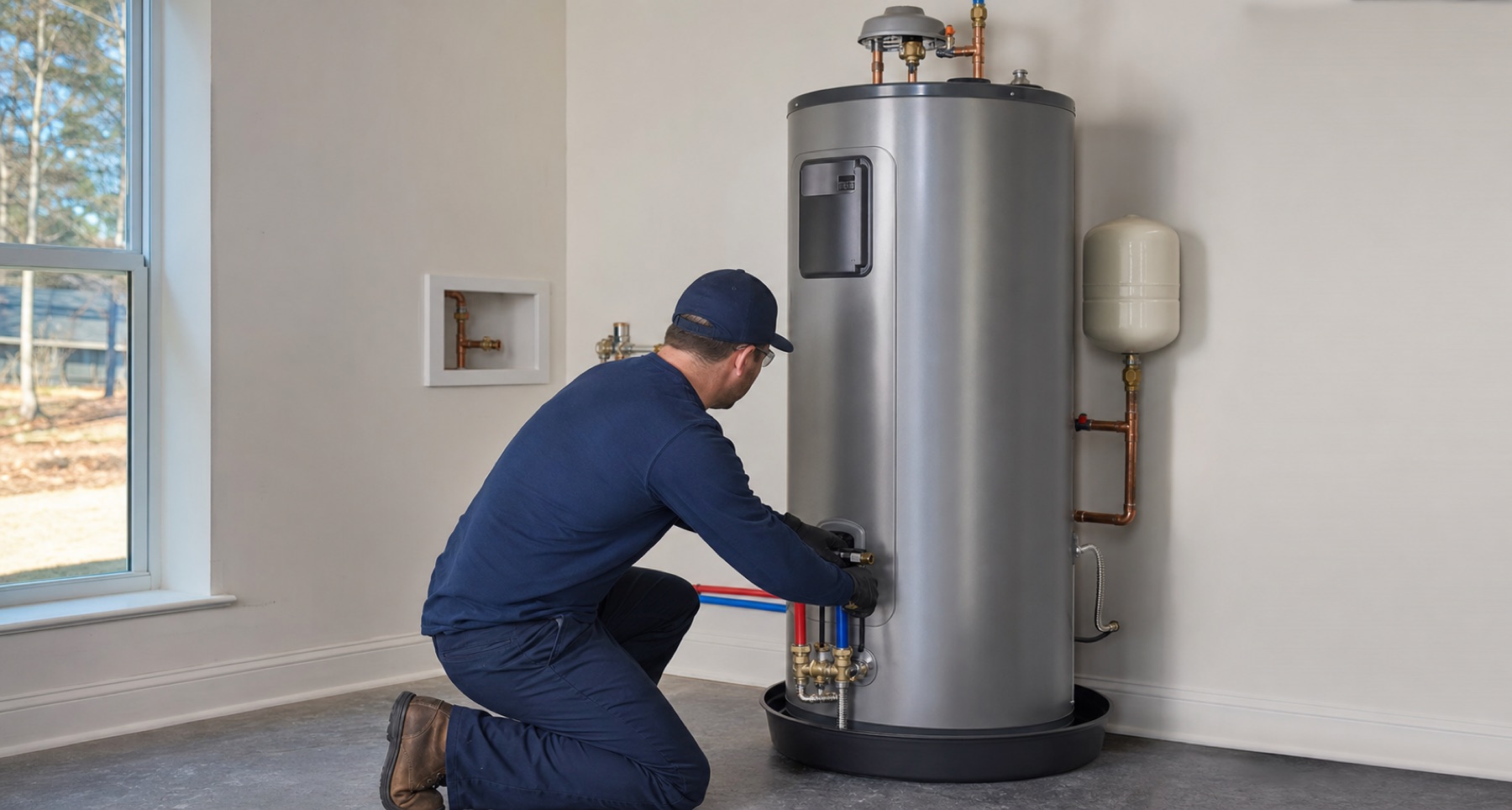
Whether hot water is inconsistent, the tank is leaking, or a new unit is planned, we evaluate the equipment, plumbing, fuel or electrical requirements, venting, drainage, and household demand.
Water heater service includes diagnosis, component repair where practical, replacement of failed equipment, and installation for planned upgrades. Common problems include no hot water, slow recovery, temperature swings, unusual sounds, discolored water, relief-valve discharge, and leakage around the unit or connected piping.
Equipment selection should reflect household demand, available fuel, electrical capacity, well-water conditions, installation space, venting, and drainage. Hardness or sediment can affect efficiency and service life, while rural properties may also need pressure and filtration considerations addressed alongside the heater.
Capacity is considered against household use and the available energy source rather than choosing by footprint alone.
Connections, shutoffs, relief discharge, drain pan, venting, combustion air, and power are reviewed as applicable.
Age, tank condition, failure type, parts, and surrounding installation guide the discussion.
Final materials depend on the existing installation, access, intended use, manufacturer instructions, and applicable requirements.
Every property is different. The estimate identifies the approved diagnostic, repair, installation, access, testing, cleanup, and exclusions that apply to your project.
Discuss My ProjectBefore the visit, clear safe access when possible, note when the symptom occurs, and gather photos, equipment information, permits, or system records that may help.
We document the symptom, model and age when available, installation conditions, energy source, and household hot-water needs.
We explain repair options or replacement considerations, including access and any related plumbing, venting, gas, or electrical work.
After approved work, we fill and start the unit correctly, check connections and operation, and review basic use and maintenance.
Not sure whether this is the correct service? Send the address, a photo when safe, and a short description. We’ll help identify the appropriate first visit.
Ask about your project →Project conditions can change the recommendation, but these answers explain common decisions and preparation steps.
Age, tank leakage, repair history, part availability, energy use, and installation condition all matter. A leaking tank generally points toward replacement, while some control or component failures may be repairable.
Sometimes. Tankless equipment may require changes to gas supply, venting, electrical service, condensate drainage, water treatment, and mounting location. A site-specific review is needed before choosing.
Sediment or mineral buildup can trap water beneath deposits and create noise. Other conditions can sound similar, so the heater and water quality should be evaluated before deciding on service.
Clear a path to the heater, move stored items away, and identify any parking or access limits. Water and the applicable energy source will be interrupted during the work.
Call or send the project details. We’ll confirm service availability and whether an inspection or diagnostic visit comes first.